Part-time work looks simple on paper — pick up a few shifts, earn some extra income, keep your schedule flexible. But actually landing the right role takes more effort than most people expect, especially if you want something that fits your skills and doesn't dead-end your career. AI tools have made a real difference here, not by doing the job search for you, but by cutting out the parts that waste the most time.
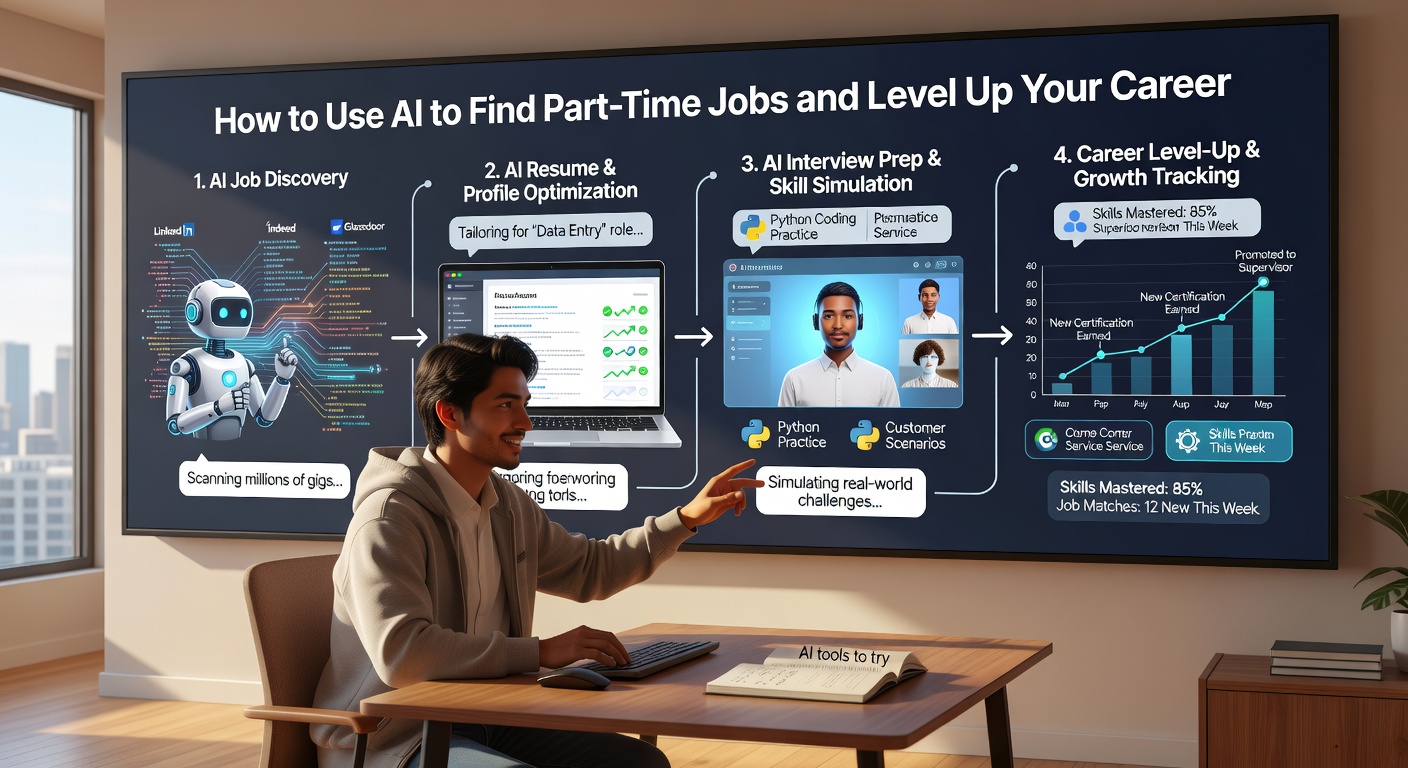
Where AI Actually Helps in a Part-Time Job Search
The biggest friction point isn't finding job listings — it's the application itself. Most people either send a generic resume to everything or spend an hour rewriting for each role and burn out after three applications. AI sits usefully in the middle: you give it your background and the job description, and it helps you tailor your resume and cover letter without starting from scratch every time.
Jobly Resume does this reasonably well. You paste in a job posting, and it adjusts your resume language to match what the employer is actually looking for — relevant skills get surfaced, irrelevant detail gets trimmed. For part-time roles especially, where hiring managers spend maybe 20 seconds on each application, that alignment matters more than a beautifully formatted document.
A Few Realistic Scenarios
A student applying for weekend retail shifts probably doesn't need much help with the resume itself, but might struggle to write a cover letter that doesn't sound like a school assignment. AI can draft something that sounds like a real person wrote it — and that's genuinely useful when you're applying to five places in one afternoon.
Someone transitioning from full-time work to part-time consulting has the opposite problem: too much experience, not enough focus. AI tools help compress a dense work history into something that reads as relevant rather than overqualified. That framing shift can be the difference between getting a callback and getting ignored.
A freelancer trying to pick up a part-time remote role alongside existing clients needs to show reliability and specific skills quickly. Here, AI helps write targeted summaries that lead with what the employer needs, rather than a chronological life story.
What AI Won't Do For You
AI won't find jobs you haven't looked for. It won't tell you which companies are actually good to work for, or whether a role has growth potential. And it won't fix a resume that has nothing to work with — if your experience is thin, the output will be thin too, just better phrased.
There's also a real risk of over-relying on AI-generated cover letters that sound polished but generic. The best results come when you treat the AI draft as a starting point and add one or two specific details yourself — a reason you want this particular job, a concrete example from your own experience. That small edit makes the whole thing feel human.
Using AI to Think About Career Direction, Not Just Applications
Part-time work can be purely transactional, or it can be a deliberate step toward something. If you're using part-time roles to build skills in a new field, AI tools can help you identify which experiences to emphasize as you move between applications — essentially helping you tell a coherent story across a patchy work history.
Jobly's cover letter builder is useful here. It lets you frame the same background differently depending on the role, which is exactly what you need when you're testing out a new direction without fully committing to it yet.
The practical upside of using AI in your job search isn't speed for its own sake — it's that you can apply more selectively and more carefully without it taking over your week. For part-time work especially, that's usually enough to get ahead of most other applicants.
Comments
Leave a Comment