You know that spiral. You find a job posting that actually excites you, pull up your resume, and immediately feel that sinking feeling—the thing hasn't been touched in eight months, the bullet points read like a job description instead of your impact, and you're not even sure the formatting still looks right on someone else's screen. Then, if you get the interview, a different panic sets in: what do I wear to this thing?
That's the gap Jobly steps into. It's an AI-powered tool that handles both resume and cover letter generation, and it also offers interview outfit suggestions matched to the role and company culture. One platform, two anxiety points addressed. That's the pitch anyway.
What Jobly Resume Actually Does Well
The resume editor is the core. You feed it your background—roles, dates, rough responsibilities—and Jobly restructures bullet points into something closer to what hiring managers actually scan for. It leans toward action-forward language and quantifiable outcomes, even when you didn't provide numbers (it will prompt you for them, which is useful accountability).
Where it saves real time: versioning. Instead of manually tweaking a single resume file for every application, Jobly lets you create role-specific variants quickly. Applied to a data analyst role and now see a business intelligence posting? You duplicate, adjust the emphasis, and the AI reweights the bullets without starting from scratch.
The cover letter side is functional but less differentiated. It generates a competent draft based on your resume and the job description. You'll still want to edit—it tends toward generic enthusiasm that sounds like every other AI-generated letter in a recruiter's inbox. Use it as a skeleton, not a final product.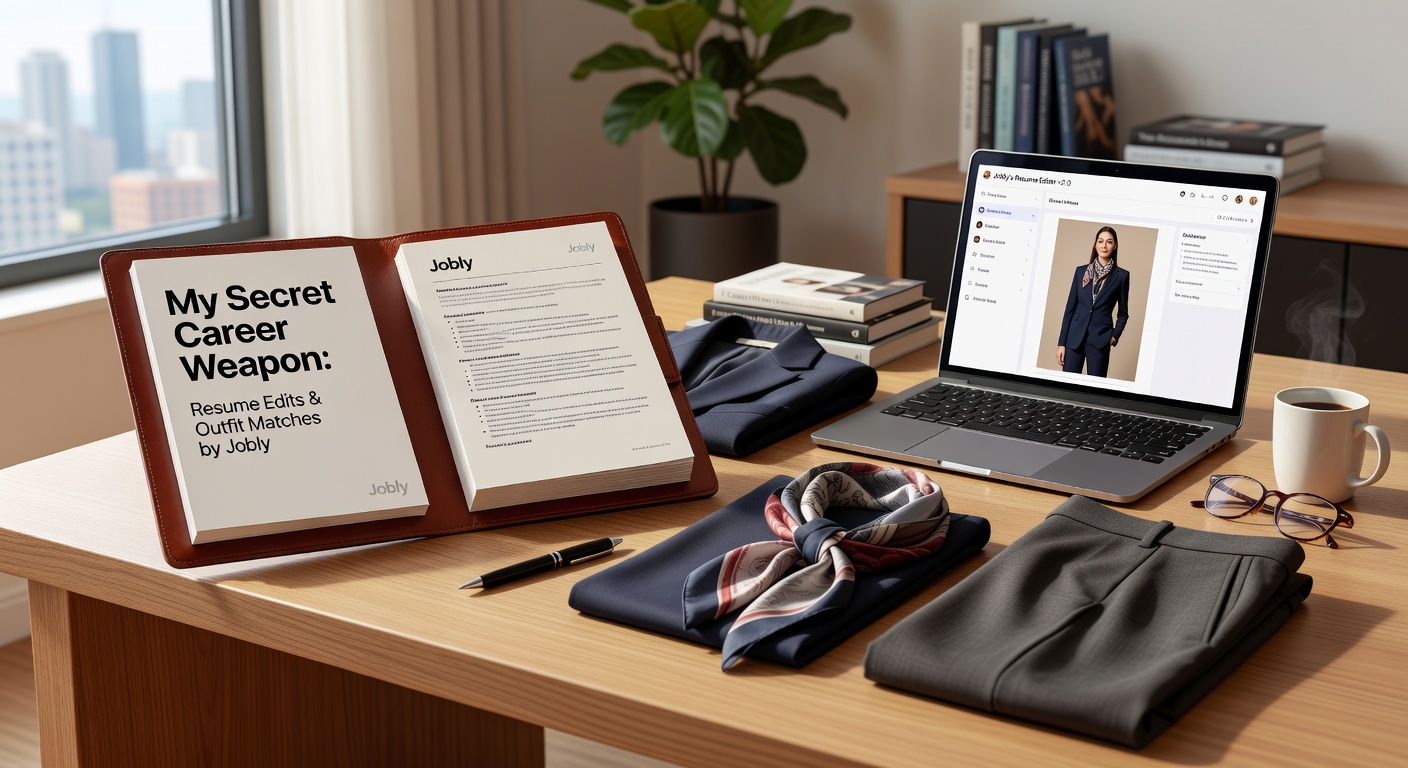
The Outfit Match Feature: Novel or Necessary?
This is the part people raise eyebrows at. Jobly's outfit matching asks for the industry, company size, and interview format (video, onsite, casual) and returns specific outfit recommendations—down to color palette and shoe type.
In practice, it's surprisingly handy for people early in their careers or switching industries. If you've only ever interviewed at startups and now you're walking into a legacy finance firm, the calibration matters. A friend used it before a consulting final round and got told "navy blazer, no black suit"—which is genuinely the conventional advice for that world, and she wouldn't have known that.
That said, if you've been in your industry a while, this feature feels redundant. You already know the dress code. And the suggestions skew conservative overall, which is safe but sometimes misses that creative roles allow more personality than Jobly accounts for.
Where It Falls Short
Jobly's AI is decent at structure but mediocre at nuance. If your experience is non-linear—career gaps, pivots, freelance stitches—it sometimes flattens those into awkward phrasing or buries them in ways that actually invite more questions rather than framing them confidently. You'll need to manually rewrite those sections.
The tool also assumes a fairly standard application pipeline. If you're applying through referral-heavy networks or informal channels where resumes matter less than conversation, the output feels over-polished for the context.
Who Should Use Jobly Resume—and Who Should Skip It
Use it if you're applying to multiple roles simultaneously and the versioning problem is what's slowing you down. It's also worth it if you're a recent grad or career changer who needs external structure to translate experience into hireable language. The outfit feature is a bonus if you're navigating unfamiliar professional norms.
Skip it if you're a senior candidate with a strong network where your reputation precedes your resume—or if your background is highly unconventional and needs a human narrative touch that AI still can't craft persuasively. Also skip it if you're expecting the cover letters to do the heavy lifting; they won't.
Jobly Resume is a practical tool for a specific kind of job search grind: high volume, moderate customization, some industry unfamiliarity. It won't replace good judgment about your own story, but it'll get you to a readable, tailored document faster than staring at a blank page and rewriting the same bullet point for the fourth time this week.
Comments
Leave a Comment