Applying for jobs means juggling two completely different anxiety triggers: making your experience look good on paper, and making yourself look presentable on camera or in the office. You tweak a single bullet point for an hour, then stare at your closet wondering if that blazer screams "startup casual" or "banking stiff." The idea of a One App for Resume Perfection and Stylish Career Outfit Matching sounds almost too convenient, but that’s exactly the angle Jobly is pushing—handling the document grind so you can focus on the holistic presentation.
Getting the document right with AI
Jobly’s core engine is built around the resume and cover letter grind. Instead of fighting Word formatting for an hour, you drop your raw experience into the AI builder. Let’s say you’re trying to pivot from retail to a corporate internship; the AI rephrases "handled customer complaints" into something that actually sounds like conflict resolution and stakeholder management. It spits out a formatted, ATS-friendly PDF in minutes.
The speed is the main sell here. You can generate a tailored cover letter for a specific posting without staring at a blank page trying to figure out how to address the hiring manager. The AI pulls keywords from the job description and weaves them into your existing history, which saves a lot of manual copy-pasting and tweaking.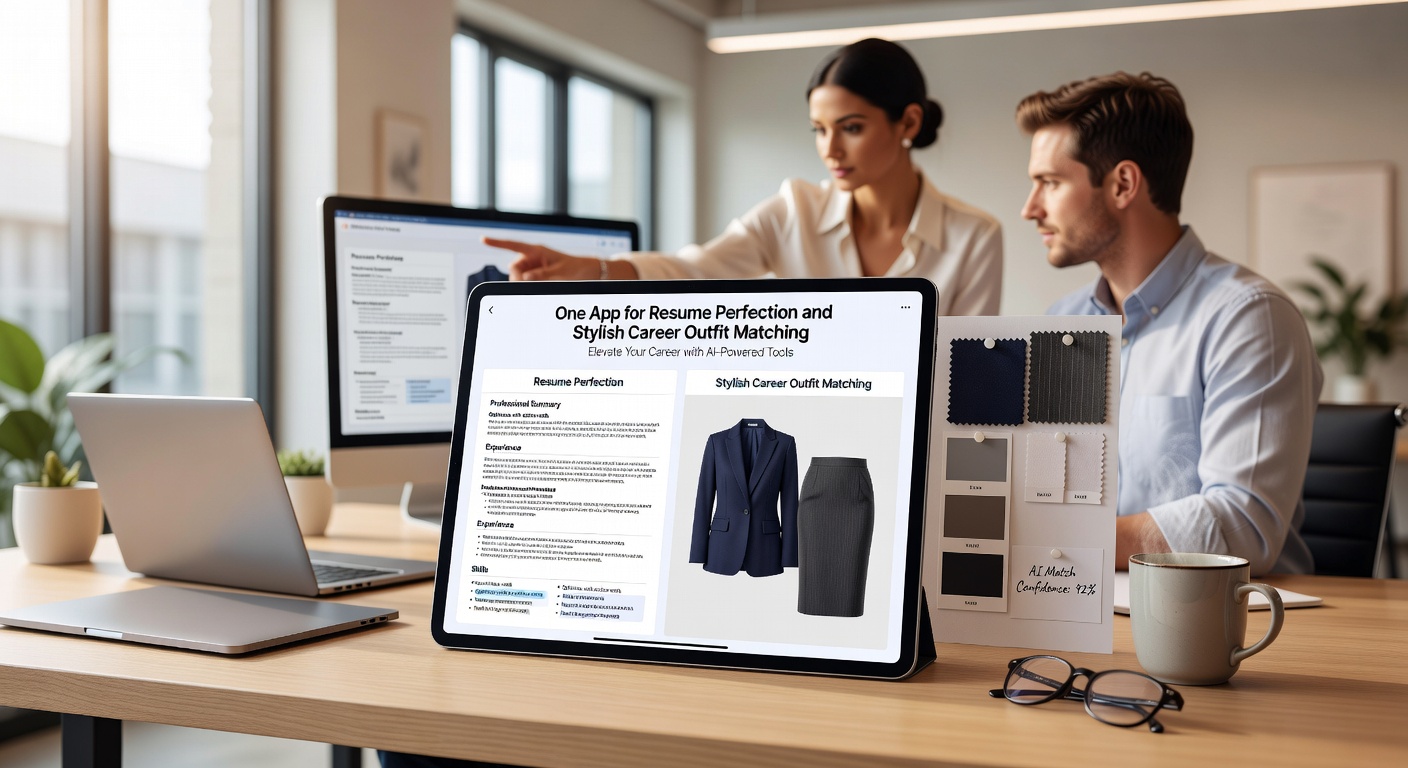
Where career outfit matching actually fits in
The "stylish career outfit matching" aspect of this app concept is where preparation meets presentation. Jobly focuses heavily on the document side, but the idea of an all-in-one prep station recognizes that a slick resume only gets you the call. Showing up to the Zoom interview in a faded hoodie while your PDF screams "senior analyst" creates a jarring disconnect.
While an AI builder isn't literally pulling shirts from your closet, the outfit matching here is about alignment—matching your visual presentation to the professional identity you just generated. If your resume projects a clean, data-driven tech professional, your interview attire better not look like you rolled out of a beach club. Some platforms bundle industry-specific styling cues with their document templates, suggesting that if you're applying for a creative role, you can loosen the tie, but if you're targeting finance, stick to the navy suit. It’s less about an AI dictating your wardrobe, and more about ensuring your visual vibe aligns with the paper persona.
Tradeoffs and alternatives
Bundling resume writing and interview styling into one workflow saves time, but it has real limitations. The AI text generation is fast, but it can lean toward generic corporate speak if you don't aggressively edit the output. You still need to inject your actual voice and verify the claims, because a hiring manager will spot a purely AI-generated paragraph pretty quickly.
On the outfit side, an app can give you broad industry dress codes, but it can't see your closet or know what actually fits your body type and budget. If you strictly need deep ATS optimization and granular formatting control, a dedicated tool like Teal or Resume.io might give you more specific settings. If you just want someone to tell you what to wear to a McKinsey interview, a specialized styling service or even a deep-dive forum search might be more practical. Jobly sits in the middle: it’s for the person who wants to move fast from application to interview without switching between five different tabs.
The practical takeaway
The appeal of a One App for Resume Perfection and Stylish Career Outfit Matching is obvious: less friction between drafting your story and presenting yourself. Jobly handles the heavy lifting of turning messy experience into readable, professional documents. Treat the outfit matching as a helpful alignment cue rather than a strict wardrobe dictator. Build the resume fast, edit the AI filler out, dress to match the vibe your new resume projects, and get the interview done.
Comments
Leave a Comment