You've been staring at a blank document for forty minutes. The internship deadline is tomorrow, and you have zero professional experience to list. Or maybe you're switching from retail to office work and can't figure out how to make "managed inventory" sound like a real skill. This is exactly the moment where an AI resume tool like Jobly enters the picture—not as some magical career coach, but as a way to stop paralysis and actually produce something you can send out.
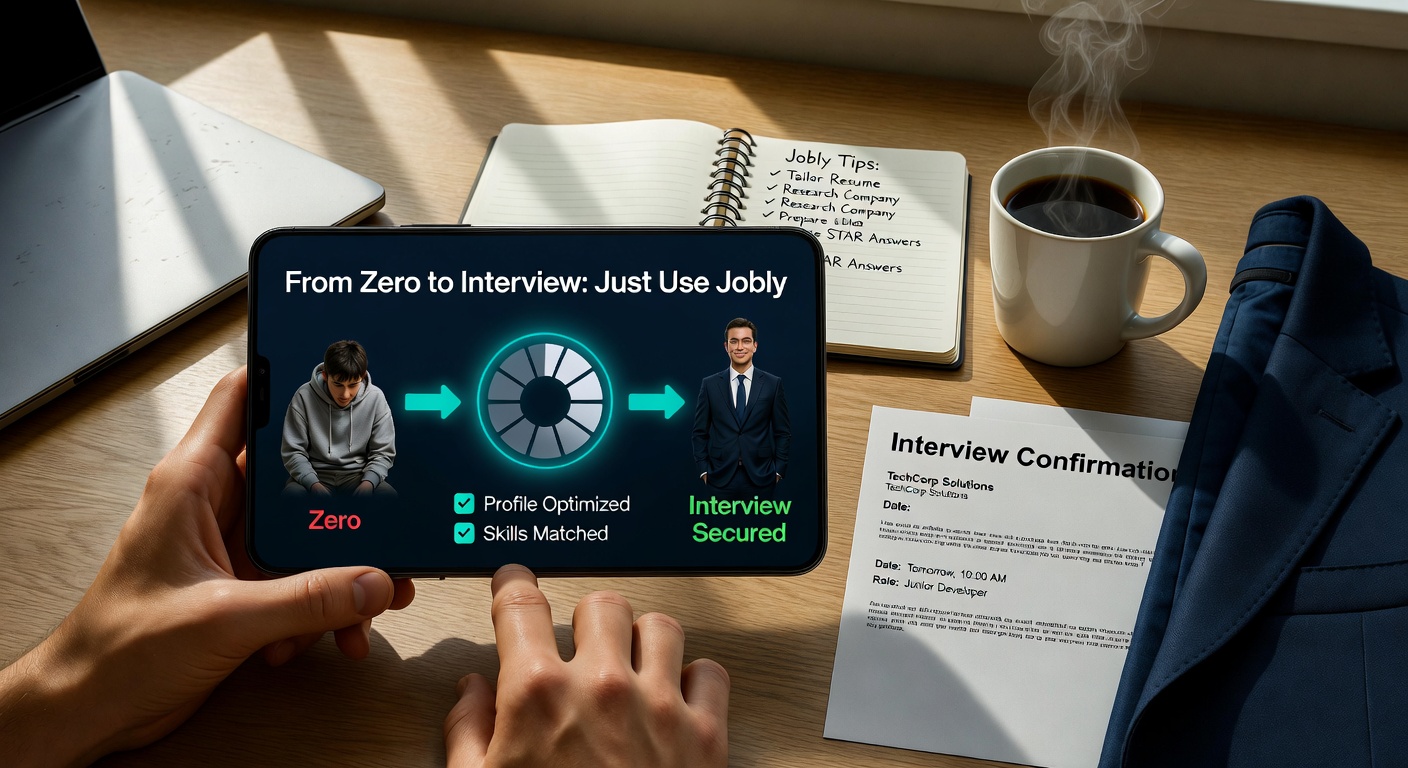
What Jobly Actually Does for You
Jobly sits in that growing category of AI document builders that take your raw, messy inputs and turn them into formatted resumes and cover letters. You feed it basics—your school, a couple of part-time gigs, maybe a volunteer stint—and it generates structured bullet points, picks a layout, and writes a cover letter that at least references the job title correctly.
The speed is the real selling point. Going from nothing to a downloadable PDF in under fifteen minutes is genuinely useful when you're applying to five postings in one evening. The AI won't invent experience you don't have, but it will rephrase what you give it into language that reads like a professional application rather than a casual self-description.
Three Scenarios Where It Clicks
First: the internship scramble. You're a sophomore with one campus club role and a summer lawn-mowing job. Jobly reframes those as "coordinated event logistics for 40+ members" and "managed independent service operations." Slightly padded? Maybe. But it's the same framing every career center teaches, just faster.
Second: the career pivot. You spent six years in food service and want to move into admin work. The tool translates "handled customer complaints daily" into "resolved client escalations and maintained service quality standards"—phrasing that actually maps to what office hiring managers scan for.
Third: the cover letter panic. You found a posting two hours before it closes. Jobly drafts something that mentions the company name, ties your background to the listed requirements, and isn't embarrassingly generic. You'll still want to tweak a couple of sentences, but you're not starting from zero anymore.
Where It Falls Short
The output is readable and professional-ish, but it's not distinctive. If twenty people with similar backgrounds all use Jobly for the same job posting, their resumes will share structural patterns and phrasing tics. Hiring managers who've seen enough AI-generated documents will recognize the rhythm eventually.
Niche roles also expose limitations. If you're applying to a specialized research position or a creative field that demands a portfolio-style CV, Jobly's templates feel too standard. The AI draws from common job description language, which works great for generalist roles but misses the specific vocabulary that, say, a lab manager or a video editor would naturally use.
Cover letters are the weakest link. They're competent but lean safe—lots of "I am excited to contribute my skills" and "your company's mission resonates with me." Fine for a first pass, but anyone who's written a letter that actually got attention knows that specificity and voice matter more than correct formatting. You'll need to rewrite at least the opening and closing paragraphs yourself.
Should You Use It, and What Else to Consider
Jobly is worth your time if you currently have no resume at all, or if yours is so outdated that opening it feels like reading a high school assignment. It's also practical when you're mass-applying to roles that don require highly customized materials—entry-level positions, generalist internships, retail-to-office transitions.
If you already have a solid resume and just want minor updates, the tool adds less value. You're better off making targeted edits yourself or working with a human reviewer who can push your wording toward something less formulaic.
Alternatives worth knowing: free templates on Google Docs give you formatting without the AI phrasing, which avoids the generic-language problem but requires more writing effort. LinkedIn's built-in resume generator pulls from your profile data, which is convenient if your profile is already detailed. And traditional career centers at universities still offer the best personalized feedback, though their hours and availability are limited.
The honest tradeoff is speed versus distinctiveness. Jobly gets you from zero to interview-ready fast. The documents won embarrass anyone, and they'll pass the initial screening filters that reject poorly formatted applications. But they won make a reader stop and remember you either. Think of it as a functional starting point—not the final version you'd send to your dream job, but the version that gets you in the door while you refine something better.
Comments
Leave a Comment