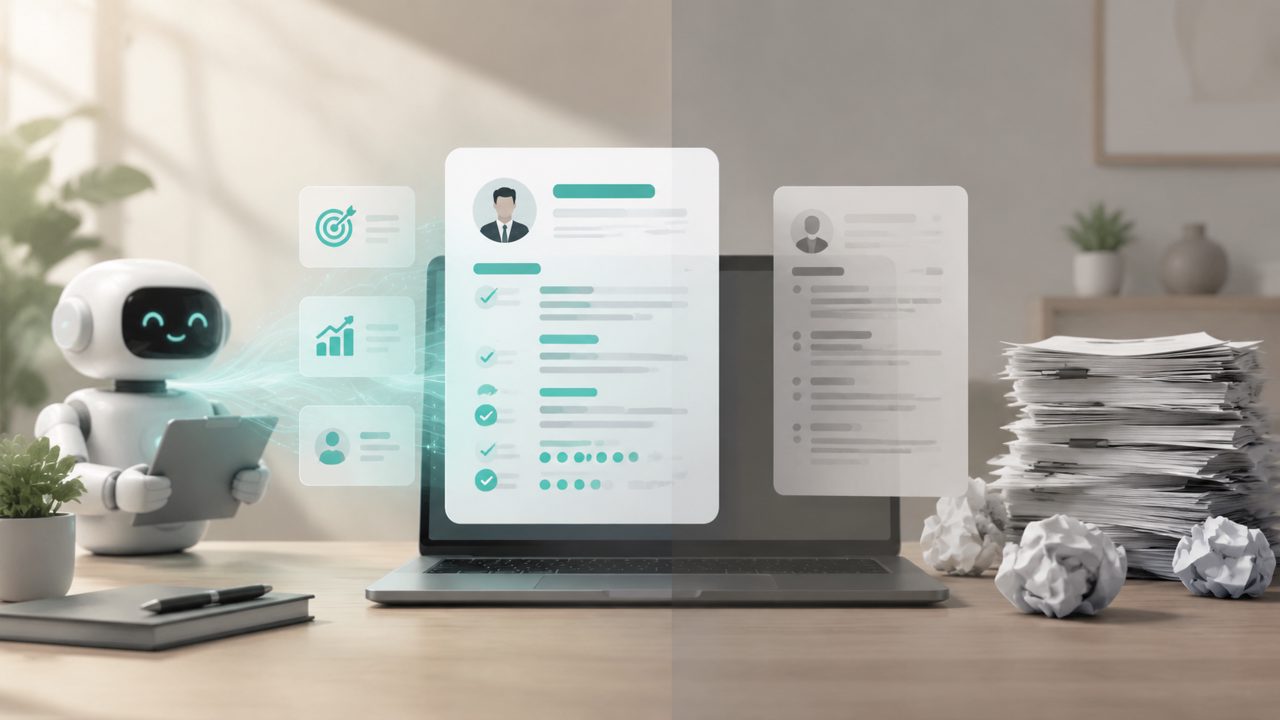
I’ve been testing AI resume builders for a while now, mostly because I keep seeing the same problems in the resumes people send me for feedback. Generic bullet points, weird formatting that doesn’t parse in applicant tracking systems, and that distinct “I wrote this in ten minutes” feel. So when I dug into Jobly, I wasn’t looking for flashy features. I was looking at whether it actually helps you avoid the common pitfalls that get a resume ignored.
The short version: Jobly gets some things right, but it also has its own set of caveats that are worth knowing about before you hit export.
The AI-generated resume trap: too generic, too polished
The biggest mistake I see with resume builders that rely heavily on AI is that they produce content that reads like a template. When I tested Jobly, I fed it a few different job descriptions and my own background. The initial output was clean, well-structured, and grammatically perfect. It also sounded a bit like a robot describing someone else’s career.
The real issue here is nuance. An AI model can look at your input and reformat it, but it doesn’t always capture the *why* behind your work. For example, if your role involved managing a project that saved your team significant time, the AI might write “Managed project that improved team efficiency.” That’s technically correct, but it misses the tangible impact. You still need to go in and rewrite most of the lines to sound like a human who actually did the work. This isn’t unique to jobly, but it’s something I’d flag if you expect a one-click perfect resume.
There’s also a subtle friction in the editing interface. I found myself hunting for where to tweak specific bullet points without accidentally breaking the layout. It’s usable, but it’s not as fluid as working in a blank document.
ATS optimization: helpful but not foolproof
A lot of people search for an ai resume builder with ats optimization because they think ATS rejection is some kind of mystery. Jobly does analyze your resume against job descriptions and suggests keywords. That’s useful. However, it also sometimes suggests keywords that feel forced or don’t match the natural flow of your experience.
One concrete scenario: I tested a resume for a data analyst role. Jobly flagged that I was missing the word “SQL” even though I had listed “structured query language” earlier. That’s actually smart detection. But then it also suggested I include “data storytelling” three times in different sections. That’s more about keyword stuffing than genuine optimization. An experienced recruiter would notice that. So while the ATS guidance is a solid starting point, don’t blindly accept every recommendation. You still need judgment about what reads naturally.
The tradeoff between speed and personalization
If you are looking for the best ai resume builder 2026 purely in terms of speed, Jobly is fast. I managed to generate a resume draft in under five minutes. If you are looking for something that deeply understands your career narrative and can write it for you, you will probably find yourself editing more than you expected.
This is where I have a qualified judgment. For roles where the content is somewhat standard—administrative positions, entry-level internships, some project management roles—Jobly works well. For senior or highly specialized roles where every bullet point matters and needs to tell a story, the AI output feels like a draft that needs significant rework. That’s not a dealbreaker, but it’s a realistic limitation.
Another limitation I noticed: the cover letter feature. It generates a letter that matches your resume, which sounds great. But in my test, it repeated several phrases from the resume nearly verbatim. If you’re applying to a role where the cover letter should offer new insight, that’s a problem.
Is it the best free resume builder? Depends on your tolerance for editing
When people search for best free ai resume builder 2026, they usually want something that saves time without sacrificing quality. Jobly’s free tier is functional. It doesn’t hide core features behind a paywall, which is rare. But the quality of the output still depends heavily on how much you’re willing to rewrite.
Here’s a realistic scenario: a friend of mine who was applying for internships used Jobly to build a resume from scratch. He spent about 15 minutes total. The first version got him zero responses. He then spent another hour manually rewriting every bullet point to be more specific, removing industry buzzwords that the AI had inserted, and tightening the formatting. That version got him a few callbacks. The tool gave him a structure, but the bulk of the work was still human effort.
If you go in knowing that the AI is more of a drafting assistant than a ghostwriter, you’ll be fine. If you expect it to produce a submission-ready document instantly, you might be disappointed.
In short, Jobly is a decent option if you want a clean resume layout and keyword suggestions without paying upfront. Just be prepared to treat the first draft as exactly that—a draft. The real value comes from catching formatting mistakes and structural gaps, not from the AI-written text itself.
Comments
Leave a Comment